MABA returns: Fall down. Get back up. Together.
Celebrate as this newsletter turns 5.

This newsletter is free. It’s better if you pay for it. Well, better for me at least. If you enjoy these weekly posts, please consider recommending The Accidental Adventurer to others and becoming a paid subscriber. You’ll get dispatches about travel, adventure and #dadlife that will sometimes be heartfelt and profound, sometimes surprising and always written in such a way as to encourage you to get outside and do something you love, whatever that something is. If you support my work, I would appreciate it.
Fall on your face 3,100 times every January and your life will probably change. There’s one way to find out for sure.
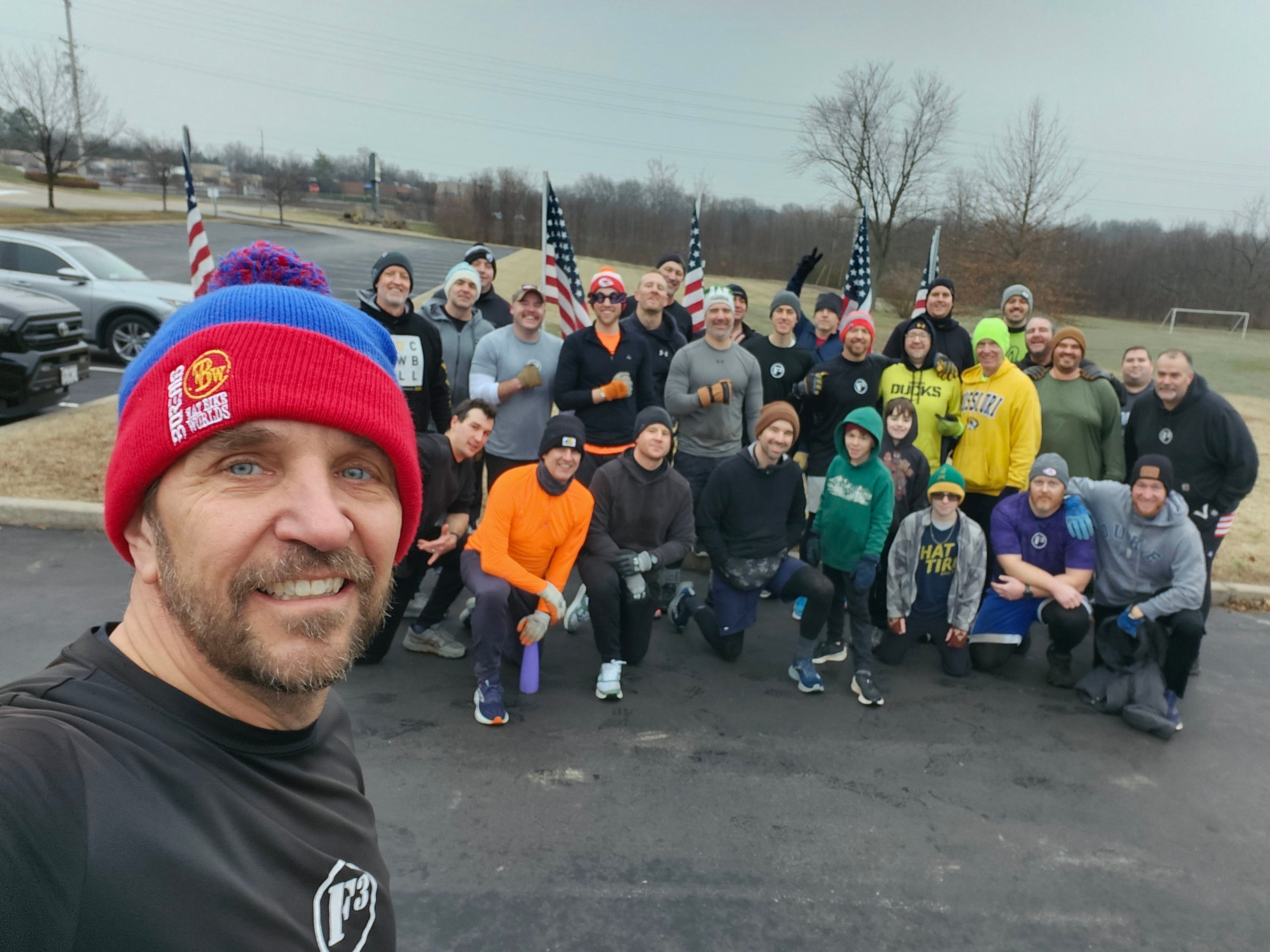
I can’t tell you what they said. They’re not my stories to share. But I can tell you 30 of us were soaked in sweat and doubled over to catch our breath as three men poured their hearts out — about love and loss and fear and getting right what was about to go tragically wrong — and I’m still thinking about their comments hours later. There’s something about doing burpees together that opens our hearts to share, our mouths to speak, and our ears to hear.
I’m all up in my feels after leading 30 men through 263 burpees apiece (some of them blindfolded, some of them rolling around on the ground, all of them sandwiched by laughter) on a freezing New Year’s Day in suburban St. Louis, and that can only mean one thing: It is opening day of MABA—Make America Burpee Again, the annual challenge in which participants do 100 burpees a day in January. Sign up here.
I launched this newsletter to cover MABA five years ago today. On this momentous birthday, I thought I’d share where it came from, where it’s going, and what I’ve learned along the way.
--
In crafting a workout in December 2020. I tried to come up with the worst possible way to get to the top of a hill at our local park. My solution to that “problem” was “sweet bippie burpees.” To do a sweet bippie burpee, you start off on your back, stand up without using your hands, do a burpee, frog jump forward, and lay back down for another one.
That’s how we got to the top of the hill, and you bet your sweet bippie it sucked.
However bad it sounds, doing it was worse. The ground was wet, the wind was biting, it took forever, etc., which is why my friend Rob “CFIT” French asked, in faux disgust: “What are you trying to do, Make America Burpee Again?”
As soon as those words left his mouth, the handful of men who heard them knew he had said something brilliant, something mind-blowing, something beautiful. It was our job, we all knew, to turn it into something horrible. We decided 100 burpees per day in January was just bad enough to be worthy of being called MABA—Make America Burpee Again.
Soon I had convinced more than 300 F3 men from across the country that MABA was a profoundly terrible idea, and they wanted in, too.
I write often about adventure and endurance events. There was no way I was going to do 3,100 burpees in a month with 300 men and not write about it, so I started this newsletter to chronicle our efforts. I opened the inaugural edition with this bit of love for my new readers: “You are getting this because you signed up to do 3,100 burpees in January, you nutjob.”
I framed MABA as an exercise in resilience, which we all needed in 2020, the year of COVID. We all fell down. We all got back up. That’s what a burpee is—falling down and getting back up. How much resilience could we build by falling down and getting back up 100 times a day?
I imagined MABA would be a fun and edifying distraction, a way to thumb my nose at the Dumpster fire that was 2020.
But MABA turned into much more than that, because 2020 wasn’t done knocking me down.
It’s easy to forget now, but getting COVID back then sucked. At least it did for me. Leg pain, intense fever dreams, body aches. Tiredness morphed into full-body, can’t-get-out-of-bed, forget-3,100-burpees-I can’t-even-do-one exhaustion.
That started Christmas Day and continued for several days. I had fallen down again. But I had also gotten up again, even if I was still wobbly.
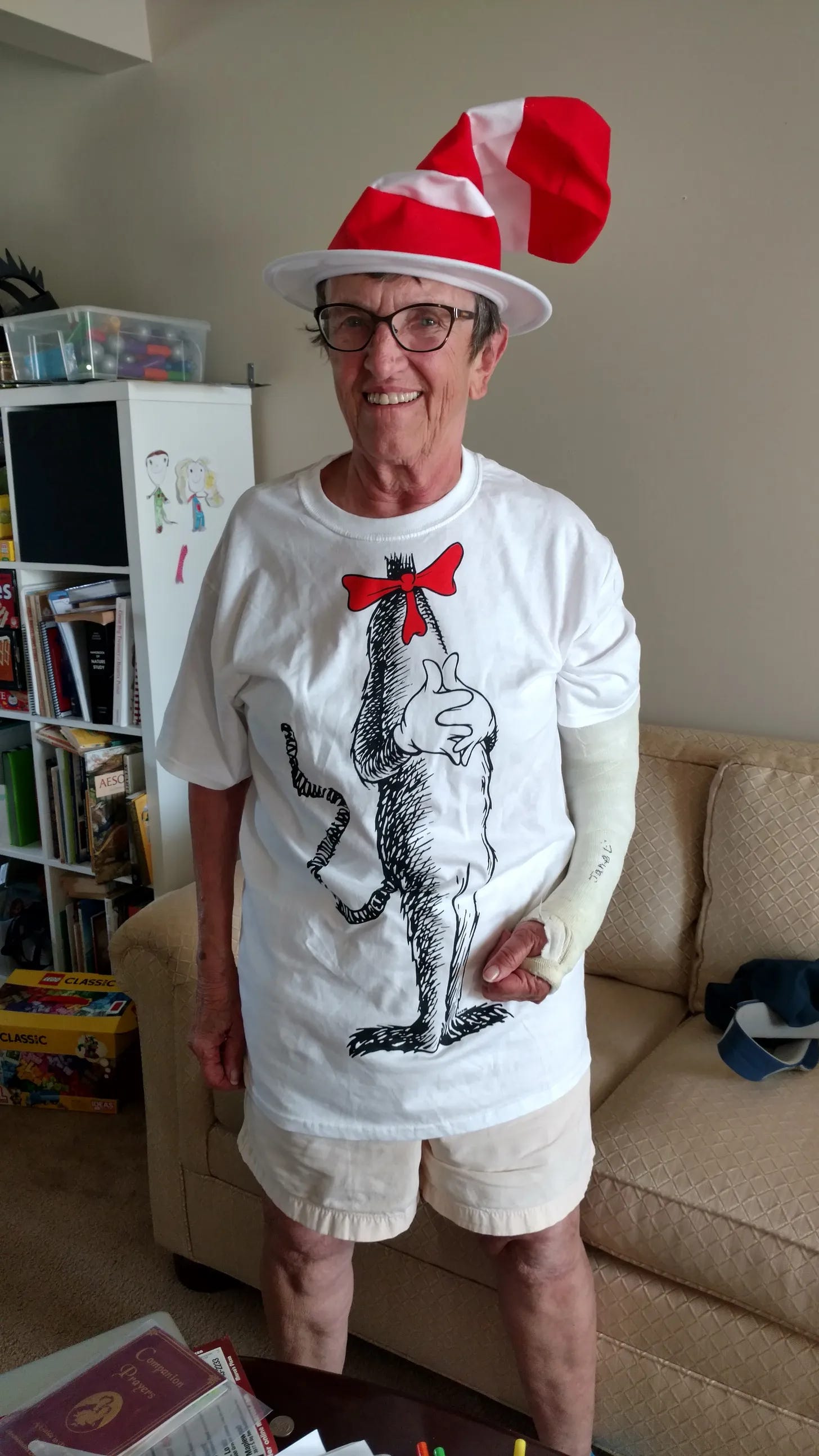
I woke up New Year’s Eve—five years ago yesterday—feeling normal again, like I was finally over it. As I made coffee, I had a sad premonition: I wondered if this would be the day I got the call, the one I had been dreading for six months. Thirty minutes later, my brother called: Our mom, Kay Crossman, had died. She was one week past her 79th birthday.
I couldn’t decide whether to laugh or cry: In the last week of 2020, I got sick with the illness behind a worldwide pandemic that killed 2 million people AND my mom died.
Her death had loomed for months. She was in her second bout with cancer. My dad chokes up when he describes how she fought. On top of the cancer, she had excruciating pain, shingles, gall stones. She fell a few times thanks to shitty overprescriptions by careless doctors. But she got back up, over and over until, finally, mercifully, she couldn’t.
Five years later I’m still wrestling with the emotions of the day she died.
I was crushed, of course. But it was also a relief. Her suffering was over. Our fear of her death was over. Then something amazing happened. I was deluged with phone calls, texts, emails, Facebook messages, etc. Her smile, her laugh, her bright blue eyes, her exuberance—I heard about it all. I knew how great she was. And I knew other people knew how great she was. But I didn’t know how many people knew, and I didn’t know how great they thought she was.
Reading those messages, taking those calls, crying at her loss, laughing at memories of her … it was simultaneously one of the best and worst days of my life.
Her pain ended.
Her joy endured.
She was all of my friends’ favorite mom. People loved being around her, none more than my two girls. Watching my mom play with my daughters was like watching a hurricane dance with a tornado. She made up a game in which she told stories about a grandmother who did whatever the hell she pleased. I didn’t have to wonder what inspired that.
Making friends was her singular character trait. She never stopped talking to people. If you went to the grocery store with her, you had to allot time for her to chit-chat with the cashier, the butcher, the guy pulling in carts, etc. Lord help you if she saw you in a Detroit Tigers hat.
I’m proud to say I’m just like her. My job requires me to talk to strangers. I can do that because I grew up watching her do it.
It is tempting to declare I did the burpees that first year, and 23,000 since then, in her honor. But she would think doing 3,100 burpees in 31 days was … how to put it … dumb. She’d tell me to come inside, put my feet up, and have a drink.
If I told her I was doing it with friends and making more along the way, she would still think it was dumb … and tell me to get my butt back outside.
She might have thought MABA was dumb, but it only exists because of her.
--
The MABA motto is “Fall Down. Get back up. Together.” The together part was crucial for me. I worked alone, then and now. I ached with isolation, then and now. In the weeks after her death, I wanted to hide. Sadness kept knocking me down. The salve was to mimic her—to surround myself with friends.
My F3 brothers sent encouraging calls, texts, Slack messages, many of them in the guise of MABA small talk, but the real reason is because they love me. It all made me want to cry, and sometimes I did.
We were already close knit at my workout location, The Last Stop. MABA pushed our relationships to greater depths. And five years later, it’s still doing that, and I’ve heard similar accounts from men across the country.
MABA sounds like a physical challenge. But it’s really a physical challenge, a relational challenge and even a faith challenge, as nobody gets through 100 burpees a day for a month without prayer, and lots of it.
By the end of that first year, we knew we would do it again. It was a little bit because our bodies were in better shape. It was mostly because our hearts were. At the risk of sounding even more immodest and self-aggrandizing than I already have, we wanted more people to do more burpees and to get out of it what we did.
I say this often, and I mean it: The point is not the burpees. It’s the together. If my peer group loved books instead of working out, I would be writing about Make America Read Again.
I say this often, too, and I half-mean it: The numbers don’t matter. The point is not how many burpees we do, it’s that we do them together. But I’m a sportswriter, and a man, and a competitive one, so of course I care about the numbers. We did 900,000 burpees the first year, 1.5 million the second, 1.92 million the third and 3.2 million each of the last two years.
Each year has been more than the last, and I hope we continue that trend.
--
Somewhere along the way, I turned this newsletter from being solely about burpees into something like a living portfolio. Sometimes that means original essays about #dadlife, sometimes that means publishing stories from my archive, sometimes that means sharing working versions of magazine stories as a way of gauging by your reaction (or lack thereof) whether I’m attacking the piece the right way.
My long-term dream is to find that elusive storytelling mix between burpees, adventure and #dadlife to attract enough paying subscribers to make this newsletter a steady source of income.
The MABA themes—fall down, get back up, together—run through most of what I write, and I try to tie it all together—burpees, adventure, my groundbreaking work about what college kids use Door Dash for, my possibly heretical descriptions of the Northern Lights, whatever this is.
The older I get, the more I realize we are always in or near one of those MABA phases—falling down or getting up, and life is so, so much better if we do it together.
❤️🔥